


The internet runs on systems designed to process information in structured ways. Behind every website, search query, online form, and browser request, there are technical standards that help devices communicate correctly. One of these standards involves URL encoding.
People often search unusual phrases while trying to solve technical issues. A query like url encoder spellmistake may appear confusing at first, but it usually reflects a practical concern. Users may be looking for a URL encoding tool, trying to fix broken characters in URLs, or dealing with formatting mistakes that affect web performance.
Although the wording is imperfect, the topic itself is important. URL encoding plays a major role in web development, data transfer, browser compatibility, and online security.
Understanding how it works can help website owners, developers, SEO professionals, and even everyday internet users avoid common errors.
What URL Encoding Means in Simple Terms
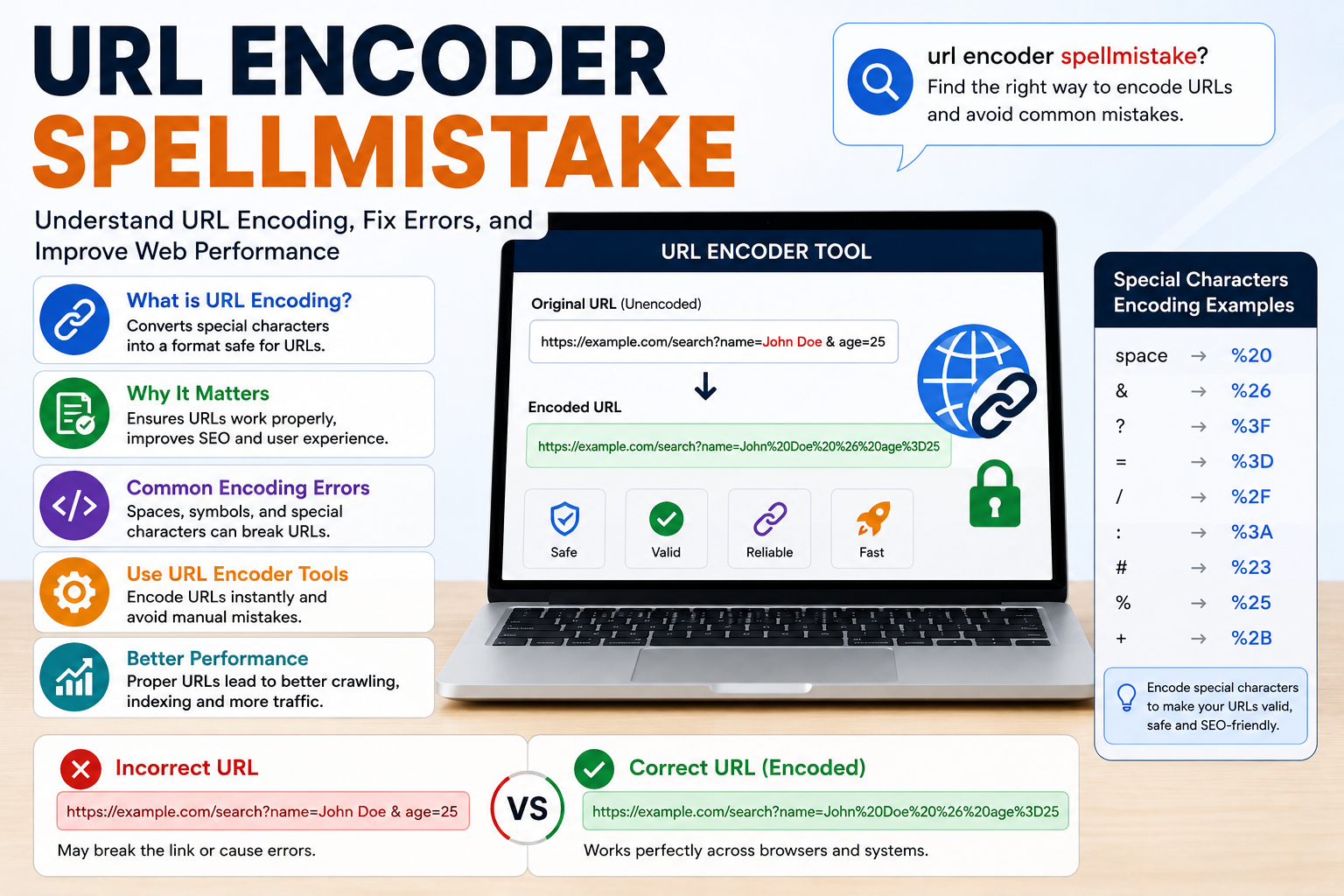
URL encoding is the process of converting certain characters into a format that browsers and servers can interpret safely.
Not all characters can appear directly inside URLs. Spaces, symbols, and special characters often need conversion.
For example, a space in a URL may become %20.
This conversion ensures that web browsers understand requests correctly.
Without encoding, some URLs could break, display incorrectly, or fail entirely.
URL encoding helps maintain consistency across systems.
It allows data to move between browsers, websites, and servers without confusion.
Why People Search for url encoder spellmistake
Search phrases are often typed quickly.
Users may misspell terms, combine ideas, or use wording based on a problem rather than technical terminology.
The phrase url encoder spellmistake likely appears when someone experiences issues such as:
Broken links
Improper URL formatting
Encoding errors
Special characters causing problems
Search parameter failures
Form submission issues
The user may not know exactly what URL encoding means, but they recognize something is wrong.
Search behavior frequently reflects intent more than accuracy.
Why URLs Need Standard Formatting
URLs function like addresses.
A browser uses them to locate specific resources online.
If the address contains unsupported characters, confusion occurs.
Imagine sending a package with an incomplete or incorrect address. Delivery becomes uncertain.
Similarly, malformed URLs may fail to load pages correctly.
Encoding ensures addresses remain readable by machines.
Consistency matters because websites interact with many different systems.
Browsers, servers, applications, APIs, and databases all depend on predictable formatting.
Common Characters That Require Encoding
Certain characters often need conversion inside URLs.
Spaces are among the most common examples.
Symbols like ampersands, percentages, question marks, and plus signs may also require special handling depending on context.
Characters from different languages sometimes create complications as well.
Encoding prevents misinterpretation.
Without it, systems might process information incorrectly.
How URL Encoding Supports Website Functionality
Many everyday internet actions depend on encoding behind the scenes.
Search engines use encoded URLs.
Online forms rely on encoded values.
Tracking parameters require proper formatting.
Ecommerce systems process encoded product filters.
Social platforms generate encoded sharing links.
Most users never notice these processes because they happen automatically.
However, when errors appear, encoding becomes important quickly.
Understanding the Real Intent Behind url encoder spellmistake Searches
The expression url encoder spellmistake often reflects frustration.
Someone may encounter broken parameters in a link.
Another user may see unusual symbols replacing readable text.
Others might struggle with special characters in URLs.
The underlying concern usually relates to functionality rather than spelling itself.
People want links to work correctly.
That practical goal drives these searches.
URL Encoding and SEO Performance
Search optimization involves many technical elements.
URL structure contributes to usability and crawlability.
Clean URLs generally improve user experience.
Encoding mistakes may create confusion or duplicate page issues in certain situations.
Proper formatting helps maintain consistency.
Search systems increasingly evaluate user experience alongside content quality.
Technical clarity supports stronger website foundations.
Good optimization combines readable URLs with reliable encoding practices.
Why Encoding Errors Sometimes Create Broken Links
Broken links damage user experience.
Encoding problems occasionally contribute to these issues.
A misplaced symbol or unsupported character can alter URL behavior.
Pages may fail to load.
Parameters may stop working.
Tracking information might disappear.
Small technical errors sometimes produce larger consequences.
This is why testing links matters before publishing.
How Developers Use Encoding Daily
Developers interact with URL encoding regularly.
Applications transfer information through APIs.
Web forms send user data.
Search filters modify page results.
Authentication systems process secure requests.
Encoding protects these interactions from formatting conflicts.
For developers, encoding is often routine.
For nontechnical users, it becomes noticeable only during problems.
The Relationship Between URL Encoding and Security
Encoding is not only about readability.
It also supports safer communication between systems.
Improper handling of user input can create vulnerabilities.
Secure processing practices reduce risks.
Encoding helps preserve structure during transmission.
Security depends on multiple layers, but correct formatting contributes to stability.
Reliable systems pay attention to small details.
Why url encoder spellmistake Queries Reflect Growing Technical Awareness
The phrase url encoder spellmistake shows something interesting about internet users today.
People increasingly investigate technical issues independently.
Website owners want to solve problems.
Bloggers learn optimization concepts.
Business owners explore performance improvements.
Digital literacy continues expanding.
Users may not always know exact terminology, but curiosity drives learning.
That shift makes technical knowledge more accessible.
Common Misunderstandings About URL Encoding
Many assume encoding changes website content.
It does not rewrite meaning.
Instead, it changes representation so systems can process information correctly.
Others think encoding matters only for developers.
In reality, anyone managing websites can benefit from understanding basics.
Even small knowledge improvements help identify issues faster.
Awareness reduces confusion.
Why Website Owners Should Care About Technical Details
Some technical concepts appear minor until problems occur.
Encoding is one example.
Incorrect formatting may affect analytics, forms, sharing links, or functionality.
Website performance depends on many small components working together.
Reliable experiences often come from invisible technical processes.
Users notice problems more than successes.
Smooth operation frequently goes unnoticed because it feels natural.
The Growing Complexity of Modern Websites
Websites today include advanced features:
Dynamic content
Tracking systems
Interactive tools
Payment systems
Localization options
External integrations
Complexity increases opportunities for formatting issues.
As systems evolve, understanding technical fundamentals becomes increasingly valuable.
Basics remain important even in sophisticated environments.
How Automation Has Reduced Manual Encoding Problems
Modern browsers and platforms handle many encoding tasks automatically.
Content management systems simplify technical processes.
Development tools identify errors earlier.
Automation reduces mistakes but does not eliminate them entirely.
Unexpected issues still occur.
Human oversight remains useful.
Technology supports efficiency, yet understanding concepts improves troubleshooting.
Why Testing Matters Before Publishing URLs
Publishing without testing can create avoidable problems.
Checking links helps identify:
Formatting issues
Broken redirects
Missing parameters
Encoding conflicts
Unexpected errors
Testing improves reliability.
Reliable experiences build trust.
Trust influences engagement.
Small checks often prevent larger issues later.
Looking Beyond url encoder spellmistake Toward Better Web Understanding
The phrase url encoder spellmistake may sound unusual, but it represents something practical.
People want websites and links to function correctly.
They seek solutions when technical problems appear.
Learning about encoding offers broader understanding of how the web operates.
Knowledge reduces dependency on guesswork.
Even basic familiarity with technical concepts improves confidence.
The Future of URL Management and Web Standards
Internet systems continue evolving.
Web technologies become more advanced.
Global audiences increase language diversity online.
Encoding standards remain important because consistency supports communication.
Future tools may automate even more processes.
However, core principles will likely remain relevant.
Systems still require structured information.
Reliable formatting still matters.
Conclusion
URL encoding may seem like a small technical topic, yet it affects many aspects of online functionality. Search queries such as url encoder spellmistake reveal how users increasingly encounter and investigate formatting issues while navigating the digital world.
Behind those searches lies a simple goal: making websites, links, and online experiences work smoothly. Understanding URL encoding helps support that goal by improving compatibility, reducing errors, and strengthening overall web functionality.