


The internet has changed how people consume information, shop, communicate, and run businesses. Expectations have changed too. Users want websites to load quickly, display correctly on mobile devices, page size checker spellmistake and provide a smooth experience without delays.
When a webpage loads slowly, visitors often leave before reading a single sentence. This is one reason website owners increasingly search for tools that measure performance. Among unusual search phrases, page size checker spellmistake appears because users are often trying to understand webpage size, loading issues, or technical errors while typing quickly or making spelling mistakes.
Even though the phrase sounds unusual, the intent behind it reflects a real concern: website performance.
Understanding page size is important for bloggers, ecommerce owners, SEO professionals, developers, and anyone managing a website.
What Page Size Means in Simple Terms
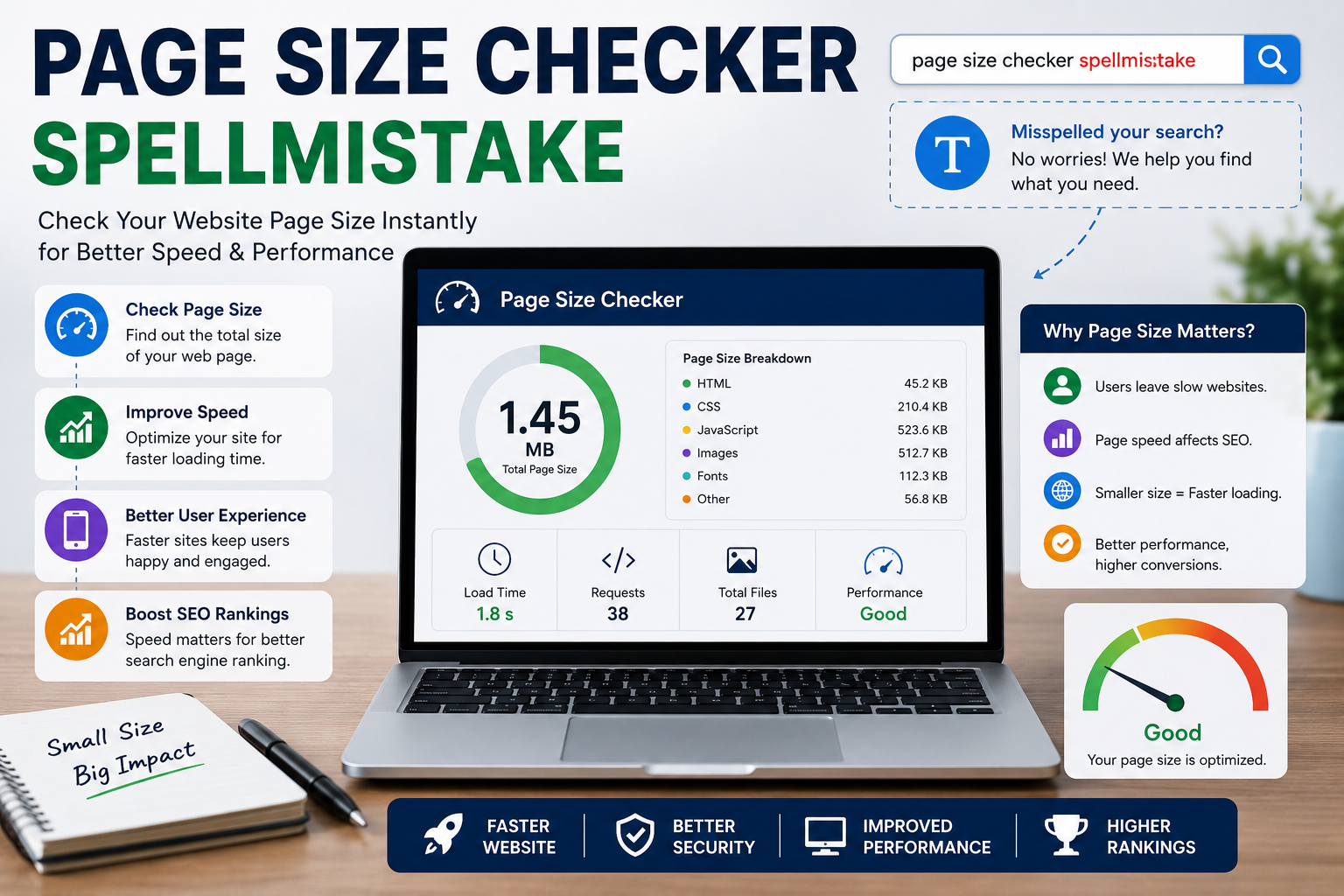
Page size refers to the total amount of data needed for a webpage to load completely.
This includes text, images, videos, JavaScript files, CSS stylesheets, fonts, tracking codes, advertisements, and embedded tools.
A page with a small size usually loads faster. A heavier page often requires more time because browsers must process additional data.
For example, two websites may look similar visually, but one could load in two seconds while another takes eight seconds. The difference may come from image optimization, scripts, or unnecessary design elements.
Page size affects much more than speed alone.
It influences user experience, conversions, search visibility, and overall satisfaction.
Why Users Search Technical Terms With Spelling Errors
Search behavior is rarely perfect.
People search while multitasking, using mobile phones, or typing quickly. Sometimes they know the problem but not the exact terminology.
That explains why phrases like page size checker spellmistake appear online. A person may simply want to know:
Why is my website slow?
How large is my webpage?
Which files increase loading time?
How can performance improve?
Search engines have become better at understanding intent rather than relying only on perfect wording.
The goal behind the search matters more than grammar.
How Slow Websites Affect Visitors
Imagine opening a website and waiting several seconds before seeing content.
Many users leave immediately.
Online attention spans are short. Delays create frustration.
Slow websites often experience:
Reduced engagement
Lower conversion rates
Higher bounce rates
Poor mobile experiences
Decreased trust
Visitors may never consciously analyze performance metrics, but they notice convenience.
Fast websites feel easier to use.
Ease often becomes trust.
The Connection Between Page Size and SEO
Website performance and search visibility increasingly overlap.
Search systems attempt to reward useful experiences. Although speed alone does not guarantee rankings, poor performance can create indirect problems.
Users who leave quickly reduce engagement.
Heavy pages may load poorly on mobile devices.
Technical inefficiencies can affect usability.
All these elements contribute to overall website quality.
SEO today involves more than keywords. Experience matters.
Content quality matters.
Technical optimization matters.
Performance has become part of broader digital success.
Why Images Often Become the Biggest Problem
Images are among the most common reasons webpages become heavy.
Modern smartphones produce high-resolution photos. Uploading these directly to websites without compression can dramatically increase page size.
Large banners, galleries, and product images accumulate quickly.
A visually attractive website is valuable, but oversized media often creates hidden costs.
Optimization helps balance quality and efficiency.
The goal is not removing visuals entirely. The goal is maintaining performance while preserving appearance.
Understanding the Real Intent Behind page size checker spellmistake Searches
The phrase page size checker spellmistake may look awkward, but it highlights something important: users care about website efficiency.
Most people searching such terms are not researching language errors.
They are trying to solve performance problems.
This reflects a wider trend. Technical awareness is growing beyond developers. Bloggers, affiliate marketers, online sellers, and small businesses increasingly monitor speed and optimization.
Website performance is becoming mainstream knowledge.
How Scripts and Plugins Increase Webpage Weight
Many websites rely on extra tools.
Analytics systems track visitor behavior.
Advertising networks display promotions.
Live chat widgets support customers.
Social sharing buttons improve engagement.
Marketing scripts collect data.
Individually these additions appear harmless.
Combined, they can substantially increase page size.
Website owners often install features gradually and overlook cumulative effects.
Months later, pages become slower without an obvious explanation.
Regular reviews help identify unnecessary additions.
Mobile Performance Has Become More Important Than Ever
Desktop browsing remains common, but mobile traffic dominates many industries.
A page performing well on high-speed broadband may struggle on mobile networks.
Heavy pages create larger problems for phone users because bandwidth and device capabilities vary.
Optimizing for mobile means considering:
Loading speed
Image compression
Script efficiency
Navigation simplicity
Responsive design
Mobile experience strongly influences retention.
Visitors expect websites to work smoothly regardless of device.
Why Businesses Ignore Technical Maintenance
Many businesses focus heavily on content creation and marketing campaigns.
Technical maintenance receives less attention because its effects are less visible.
Performance issues often develop slowly.
Plugins accumulate.
Unused code remains active.
Images grow larger.
Design changes increase complexity.
Eventually speed declines.
Routine maintenance helps prevent these issues before they affect users.
Ignoring performance usually costs more later.
How Page Size Influences Conversion Rates
Website conversions depend on trust and convenience.
Slow pages interrupt buying decisions.
A visitor considering a purchase may abandon checkout because loading takes too long.
This applies beyond ecommerce.
Newsletter signups
Appointment bookings
Lead generation
Service inquiries
Membership registrations
All can suffer when performance declines.
Optimization supports smoother customer journeys.
Small improvements sometimes produce meaningful results.
Why Monitoring Performance Should Be Ongoing
Performance is not a one-time task.
Websites evolve continuously.
New content gets added.
Designs change.
Tracking systems update.
Media expands.
Because websites grow, optimization must continue as well.
Periodic performance checks reveal problems early.
Early adjustments are easier than major repairs later.
Consistency matters more than perfection.
The Growing Popularity of page size checker spellmistake Queries
Searches such as page size checker spellmistake demonstrate an interesting shift in online behavior.
People increasingly recognize that speed affects success.
Years ago, performance discussions were mostly limited to developers.
Now content creators discuss loading time.
Store owners monitor speed scores.
SEO professionals review page weight.
Optimization knowledge is spreading across industries.
Technical awareness has become more practical and accessible.
Content Quality and Technical Quality Must Work Together
Fast websites alone do not create value.
Content remains essential.
A website with excellent speed but weak information may struggle to keep visitors engaged.
Likewise, outstanding content hidden behind slow loading can lose readers before they arrive.
Strong websites often combine:
Useful information
Good structure
Fast loading
Clear design
Easy navigation
Trustworthy presentation
Success usually comes from balance rather than extremes.
Why Overdesign Sometimes Hurts User Experience
Modern websites often pursue visual impact.
Animations, sliders, background videos, and effects may look impressive.
However, excessive design elements frequently increase page size.
More complexity does not always improve experience.
Simple layouts can perform exceptionally well.
Minimal approaches often support clarity and speed simultaneously.
Design should enhance usability rather than compete with it.
Common Misunderstandings About Website Speed
Many assume upgrading hosting automatically solves performance issues.
Hosting matters, but optimization remains important.
Others believe only large websites experience speed problems.
Even small blogs can become heavy through inefficient media or unnecessary plugins.
Some think visitors will tolerate delays if content is valuable.
In reality, users often leave before evaluating quality.
Performance influences first impressions.
First impressions matter.
What Website Owners Can Do to Reduce Page Size
Improvement usually starts with awareness.
Compressed images reduce unnecessary weight.
Removing unused plugins helps efficiency.
Limiting excessive scripts improves loading.
Optimizing fonts supports faster rendering.
Cleaning outdated code prevents clutter.
Small adjustments accumulate over time.
Incremental improvements often produce noticeable results.
The process is continuous rather than temporary.
Looking Beyond Numbers and Focusing on Real Users
Performance reports provide useful metrics.
However, numbers alone do not tell the full story.
A website may receive an acceptable score yet still frustrate users.
Real experience matters most.
Can visitors access content quickly?
Does navigation feel smooth?
Are pages responsive?
Do mobile users struggle?
Human experience remains the ultimate measure.
Optimization should serve people, not only reports.
Why page size checker spellmistake Reflects a Larger Digital Trend
The phrase page size checker spellmistake represents more than an unusual search term.
It reflects growing concern around speed, efficiency, and usability.
Users increasingly want websites that work well without delays.
Performance awareness continues expanding beyond technical communities.
That shift is significant because faster, cleaner websites benefit everyone.
Businesses gain engagement.
Visitors gain convenience.
Search experiences improve.
Efficiency creates value across the web.
The Future of Website Optimization
Web technologies continue evolving rapidly.
Interactive designs grow richer.
Media becomes more advanced.
User expectations increase.
At the same time, patience decreases.
Future optimization will likely rely more heavily on automation and intelligent performance monitoring.
Still, technology alone cannot replace thoughtful decision-making.
Website owners must choose which features truly help users.
Not every addition improves experience.
Sometimes removing complexity creates stronger results.
Conclusion
Website performance influences trust, engagement, visibility, and user satisfaction. Page size may sound like a technical detail, but its impact reaches almost every part of the online experience.
Search phrases like page size checker spellmistake reveal how people increasingly seek solutions for speed problems, even when wording is imperfect. Behind those searches lies a practical goal: building websites that load faster, function better, and serve visitors more effectively.
Understanding page size is no longer only for developers. It has become an important part of creating successful digital experiences.