

Understanding What Online Presence Management Really Means
The internet has completely changed how people discover businesses, services, and brands. Before customers contact a company, they usually search online, read reviews, check social media pages, compare competitors, and analyze website quality. Because of this behavior, businesses can no longer ignore how they appear online.
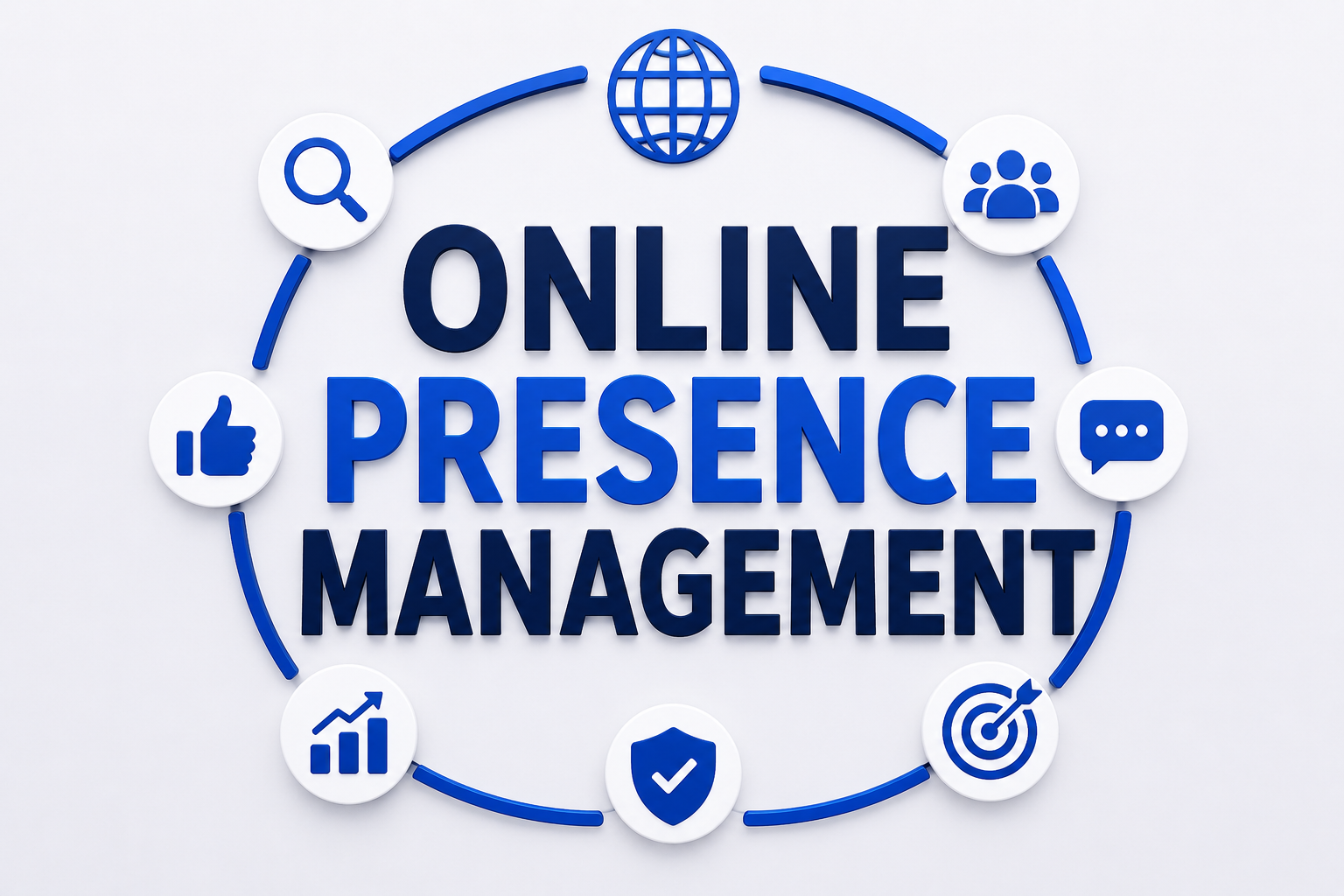
This is where online presence management becomes important. It refers to the process of controlling, improving, and maintaining how a business appears across digital platforms. This includes websites, search engines, social media profiles, review platforms, directories, blogs, and online mentions.
A strong digital presence helps businesses build trust, attract customers, improve visibility, and increase revenue. On the other hand, poor online visibility can make even a good business look unreliable or outdated.
Today, businesses of all sizes need a strategy that ensures customers can easily find accurate information, interact with the brand, and develop confidence before making a purchase decision.
Why Businesses Cannot Ignore Their Online Presence Anymore
Modern customers depend heavily on online research before buying anything. Whether someone wants a restaurant, marketing agency, dentist, clothing store, or software provider, the first step is usually a Google search.
If a company has weak visibility online, potential customers may never discover it. Even worse, they might choose a competitor with stronger branding and better digital engagement.
Strong online presence management creates several important advantages:
- Better brand visibility
- Higher customer trust
- Increased website traffic
- More inquiries and leads
- Better customer engagement
- Improved search engine rankings
- Stronger brand reputation
People also judge businesses based on professionalism online. A poorly designed website, inactive social media page, or negative reviews can damage trust immediately.
That is why businesses increasingly invest in long-term digital strategies instead of treating online platforms as secondary marketing channels.
Digital Brand Management and Why It Matters
One important secondary keyword related to this topic is digital brand management. This focuses on maintaining a consistent and trustworthy brand image across all online channels.
Brand consistency is extremely important because customers interact with businesses on multiple platforms. They may visit a website, then check Instagram, LinkedIn, YouTube, or online reviews before making a decision.
If branding looks inconsistent across these platforms, customers may become confused or lose trust.
Digital brand management includes:
- Consistent visual identity
- Professional messaging
- Reputation monitoring
- Customer engagement
- Social media management
- Review response strategies
Businesses that actively manage their brand online usually build stronger customer loyalty over time.
A professional approach to online presence management ensures that every platform supports the same brand identity and business goals.
Search Engine Visibility Is the Foundation of Online Growth
One of the biggest parts of digital success is visibility on search engines like Google. Even the best products or services struggle if customers cannot find them online.
Search engine optimization helps businesses appear for relevant searches. For example, when users search for services related to a business, optimized websites have a higher chance of appearing on the first page.
SEO involves several important factors:
- Keyword optimization
- Technical website improvements
- Quality content creation
- Backlink building
- Mobile optimization
- Site speed improvements
Strong search visibility increases organic traffic, which often converts better than random advertising traffic.
Businesses investing in online presence management often combine SEO with branding, social media, and reputation strategies for stronger long-term growth.
Reputation Management Services and Customer Trust
Another important secondary keyword is reputation management services. Online reputation directly affects customer decisions because people trust reviews and online feedback more than advertisements.
A single negative review can influence purchasing decisions, especially if businesses ignore customer complaints publicly.
Reputation management involves:
- Monitoring reviews
- Responding professionally to complaints
- Encouraging satisfied customers to leave feedback
- Managing public perception
- Reducing the visibility of harmful content when possible
Customers often compare businesses based on ratings before contacting anyone. A company with hundreds of positive reviews naturally appears more trustworthy than one with no online reputation.
Businesses that actively manage reviews usually experience higher conversion rates because customers feel more confident.
This is why reputation management has become a major component of online presence management strategies.
Social Media Presence and Audience Engagement
Social media platforms are no longer optional for businesses. Customers expect brands to have active and professional social profiles.
An inactive account can make a business look abandoned or unreliable. On the other hand, consistent activity builds familiarity and engagement.
Social media helps businesses:
- Build brand awareness
- Communicate with customers
- Share updates and promotions
- Generate traffic
- Build community trust
- Improve customer relationships
Platforms like Facebook, Instagram, LinkedIn, TikTok, and YouTube all serve different purposes depending on the industry.
For example, LinkedIn works well for B2B companies, while Instagram and TikTok are highly effective for visual brands and younger audiences.
Strong social engagement supports online presence management by increasing visibility beyond search engines alone.
Online Reputation Monitoring for Long-Term Stability
Another valuable secondary keyword is online reputation monitoring. Monitoring online mentions helps businesses understand how customers perceive them across the internet.
People discuss brands on forums, social media, review platforms, blogs, and news websites. Without monitoring systems, businesses may miss important conversations or reputation risks.
Online reputation monitoring helps companies:
- Identify negative feedback quickly
- Track customer sentiment
- Discover brand mentions
- Analyze competitor perception
- Improve customer service responses
Businesses that monitor their reputation consistently can solve issues before they become major public problems.
This proactive approach protects brand credibility and strengthens long-term customer relationships.
Website Optimization and User Experience
A business website acts as the center of its online presence. Even if customers discover a business through social media or Google, they often visit the website before making contact.
A poor website experience can instantly reduce trust.
Important website factors include:
- Fast loading speed
- Mobile responsiveness
- Easy navigation
- Clear service information
- Professional design
- Strong calls-to-action
- Secure browsing experience
Google also considers user experience as a ranking factor. Slow or outdated websites may struggle to rank well in search results.
Businesses investing in online presence management often prioritize website improvements because websites directly affect both conversions and SEO performance.
Content Marketing and Authority Building
Another important secondary keyword is content marketing strategy. Content marketing plays a huge role in building authority online.
Search engines reward websites that consistently publish useful and relevant information. Customers also trust businesses that educate rather than only promote products.
Content marketing includes:
- Blog articles
- Guides
- Videos
- Infographics
- Case studies
- Tutorials
- Industry insights
High-quality content helps businesses rank for more keywords while building credibility within their industry.
For example, a law firm publishing legal guides or a fitness brand sharing workout advice demonstrates expertise and professionalism.
Strong content strategies support online presence management by improving both visibility and customer trust.
Local SEO and Geographic Visibility
Another useful secondary keyword is local business marketing. Local visibility is essential for businesses serving specific geographic areas.
When users search for nearby services, Google often displays local results first. Businesses optimized for local search gain more calls, visits, and inquiries.
Local marketing includes:
- Google Business Profile optimization
- Local keywords
- Map rankings
- Location-based content
- Customer reviews
- Citation building
Restaurants, clinics, gyms, repair services, agencies, and local stores especially benefit from strong local visibility.
Customers searching locally usually have high purchase intent, making local SEO highly valuable.
Why Consistency Is Important Across Platforms
Many businesses create social profiles and websites but fail to maintain consistency. This weakens brand trust and creates confusion.
Consistency includes:
- Same business name
- Accurate contact details
- Uniform branding
- Consistent messaging
- Updated business hours
- Professional communication style
Customers feel more confident when every platform provides accurate and professional information.
Consistency also improves search engine trust because Google values reliable business information across the internet.
Effective online presence management ensures that all platforms work together instead of appearing disconnected.
Common Mistakes Businesses Make Online
Many businesses struggle online because they make avoidable mistakes.
One common problem is neglecting customer reviews. Ignoring complaints publicly can damage credibility.
Another issue is inconsistent branding. Different logos, colors, or messaging across platforms make businesses appear unprofessional.
Poor website design is another major problem. Slow websites or confusing navigation reduce conversions significantly.
Some businesses also focus only on social media while ignoring SEO and website optimization.
Others publish low-quality content simply to stay active without providing real value to customers.
Successful businesses understand that online presence management requires a complete strategy rather than isolated marketing activities.
How Online Presence Affects Sales and Revenue
A strong online presence directly influences purchasing behavior. Customers are more likely to buy from businesses that appear trustworthy, active, and visible online.
Positive reviews, strong branding, quality content, and professional websites all contribute to higher conversion rates.
Businesses with strong online visibility also attract more inbound leads because customers discover them naturally through search engines and social media.
Over time, this reduces dependency on expensive advertising campaigns.
A professional digital presence also improves customer retention because people trust brands that maintain active communication and transparency online.
The Role of Analytics in Digital Growth
Analytics help businesses understand how customers interact with their online platforms.
Important metrics include:
- Website traffic
- Bounce rates
- Search rankings
- Conversion rates
- Social engagement
- Customer behavior
- Lead generation performance
Analyzing this data helps businesses improve strategies continuously.
For example, if certain content attracts more visitors, businesses can create similar topics in the future.
Data-driven decisions are essential for successful online presence management because digital marketing constantly evolves.
Why Businesses Hire Professional Agencies
Managing websites, SEO, social media, reviews, branding, and content internally can become overwhelming for many businesses.
Professional agencies provide expertise, tools, and strategies that help businesses grow faster and more efficiently.
Agencies usually handle:
- SEO optimization
- Reputation management
- Social media management
- Content marketing
- Website improvements
- Analytics reporting
- Branding strategies
Working with professionals allows businesses to focus on operations while experts manage digital growth.
A well-managed online presence often becomes one of the strongest competitive advantages in modern markets.
The Future of Online Presence Management
Digital competition continues increasing every year. Businesses that fail to adapt may struggle to survive as customers become more dependent on online research.
Search engines, AI-driven search experiences, voice search, and mobile browsing are changing how users discover businesses online.
Companies that invest early in strong digital strategies will gain long-term advantages over competitors.
Future success will depend heavily on visibility, trust, customer engagement, and brand authority across digital platforms.
That is why online presence management is no longer just a marketing strategy. It has become a core part of business growth, customer acquisition, and long-term brand survival in the digital world.